
Choosing the right lumens for a retail store can be harder than it first appears. Too little light can create dark merchandise zones, while excessive output can cause glare and waste energy. I recommend defining the store, lighting task, and fixture layout before deciding how many lumens to purchase.
The required lumens for a retail store depend on its area, ceiling height, layout, merchandise, surface reflectance, and desired illuminance. Buyers should distinguish between lumens per fixture, total installed lumens, and lux on the target surface. A 2,000-lumen fixture can be a useful starting reference, but it is not a universal answer.
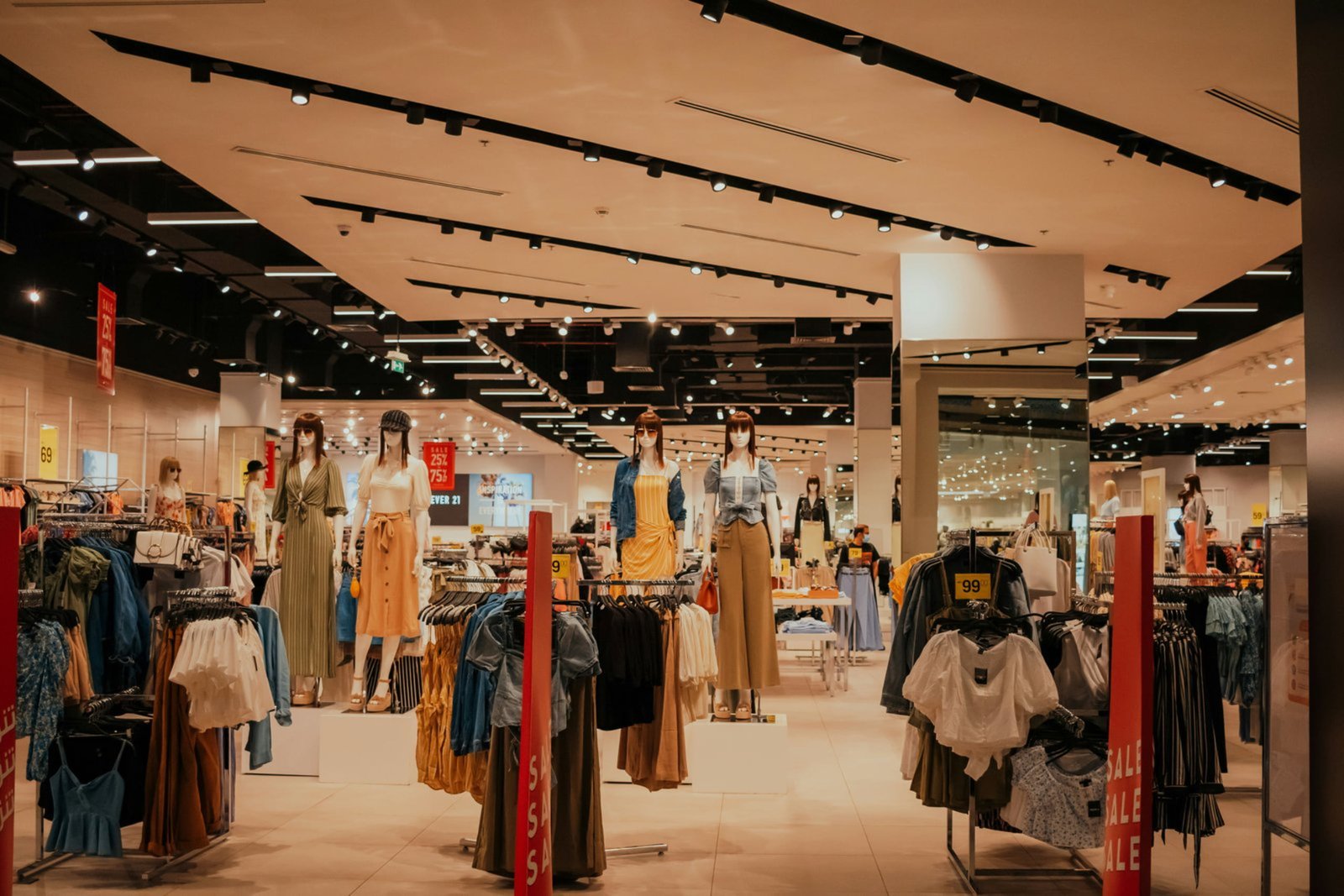
A reliable answer starts with the right questions rather than a fixed lumen number. In our presales discussions, I first clarify the store dimensions and intended use. I then help the buyer translate those requirements into preliminary fixture output, quantity, beam angle, and placement.
What Do Lumens for a Retail Store Actually Measure?
Retail buyers often use lumens, watts, and lux as if they mean the same thing. That confusion can lead to the wrong fixture specification. The problem becomes more serious when a buyer compares products using wattage alone or treats total fixture lumens as the light reaching merchandise.
Lumens measure the visible light emitted by a light source or fixture. Watts measure electrical power, while lux measures how much light reaches a surface. When estimating lumens for a retail store, buyers must separately evaluate fixture output, total installed output, and illuminance at shelves, displays, counters, floors, or other target surfaces.
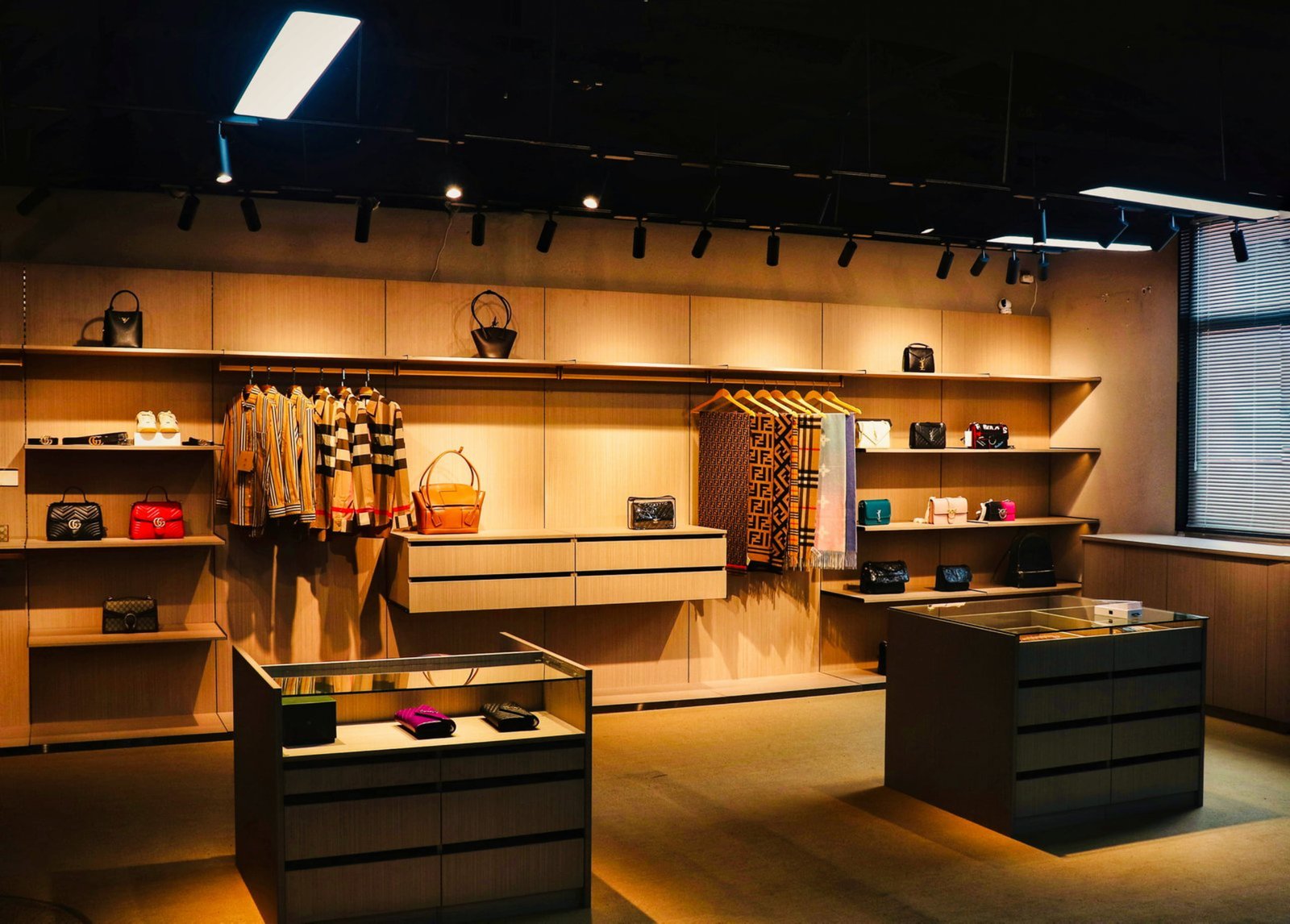
Lumens, Watts, and Lux Serve Different Purposes
I often receive an inquiry that begins with a question such as, “How many watts do I need for my shop?” I cannot give a responsible answer from wattage alone. LED fixtures with the same input power can produce different lumen outputs because their efficacy, optical design, thermal management, drivers, and LEDs are different.
The basic terms have distinct meanings:
| Metric | What It Describes | Typical Procurement Use |
|---|---|---|
| Lumens (lm) | Light output from a lamp or fixture | Comparing the nominal output of products |
| Watts (W) | Electrical power consumed | Estimating energy use and circuit load |
| Lumens per watt (lm/W) | Luminous efficacy | Comparing how efficiently products convert power into visible light |
| Lux (lx) | Lumens reaching one square meter | Evaluating illuminance on merchandise or work surfaces |
| Beam angle | The spread of the emitted light | Deciding whether light will be concentrated or distributed |
One lux equals one lumen per square meter, but that relationship does not mean that a 100-square-meter store only needs 100 fixture lumens to achieve one lux everywhere. Real spaces have optical losses, varying distances, different surface reflectance, obstructions, and overlapping beams.
Three Lumen Values Must Remain Separate
Buyers should distinguish between these three quantities:
- Single-fixture lumens: The rated output of one track light, downlight, linear light, or magnetic light.
- Total installed lumens: The sum of the nominal lumen outputs of all installed fixtures.
- Light delivered to the target: The illuminance measured in lux at a shelf, display, counter, wall, or floor.
For example, twenty fixtures rated at 2,000 lumens each provide a nominal total of 40,000 installed lumens. However, the installation does not deliver all 40,000 lumens evenly to every target surface. Beam direction, mounting height, optical losses, spacing, and room geometry determine where the light goes.
I treat fixture lumens as an important product specification, not as a complete retail lighting design.
Buyers should also confirm whether a supplier states LED chip lumens, light-source lumens, or actual fixture output. These figures can differ because lenses, reflectors, diffusers, and thermal conditions introduce losses. When comparing suppliers, buyers should request data based on the same measurement basis.
What Information Determines the Lumens for a Retail Store?
A buyer may want a quick product recommendation, but incomplete project information makes that recommendation unreliable. If I do not know the store size or ceiling height, even an apparently precise number can create underlighting, excessive brightness, poor uniformity, or unnecessary purchasing costs.
The main inputs for estimating lumens for a retail store are floor area, ceiling and mounting height, store layout, merchandise zones, intended lighting tasks, fixture type, beam angle, surface colors, and desired illuminance. Buyers should provide these details before a supplier recommends fixture output, quantity, or spacing.
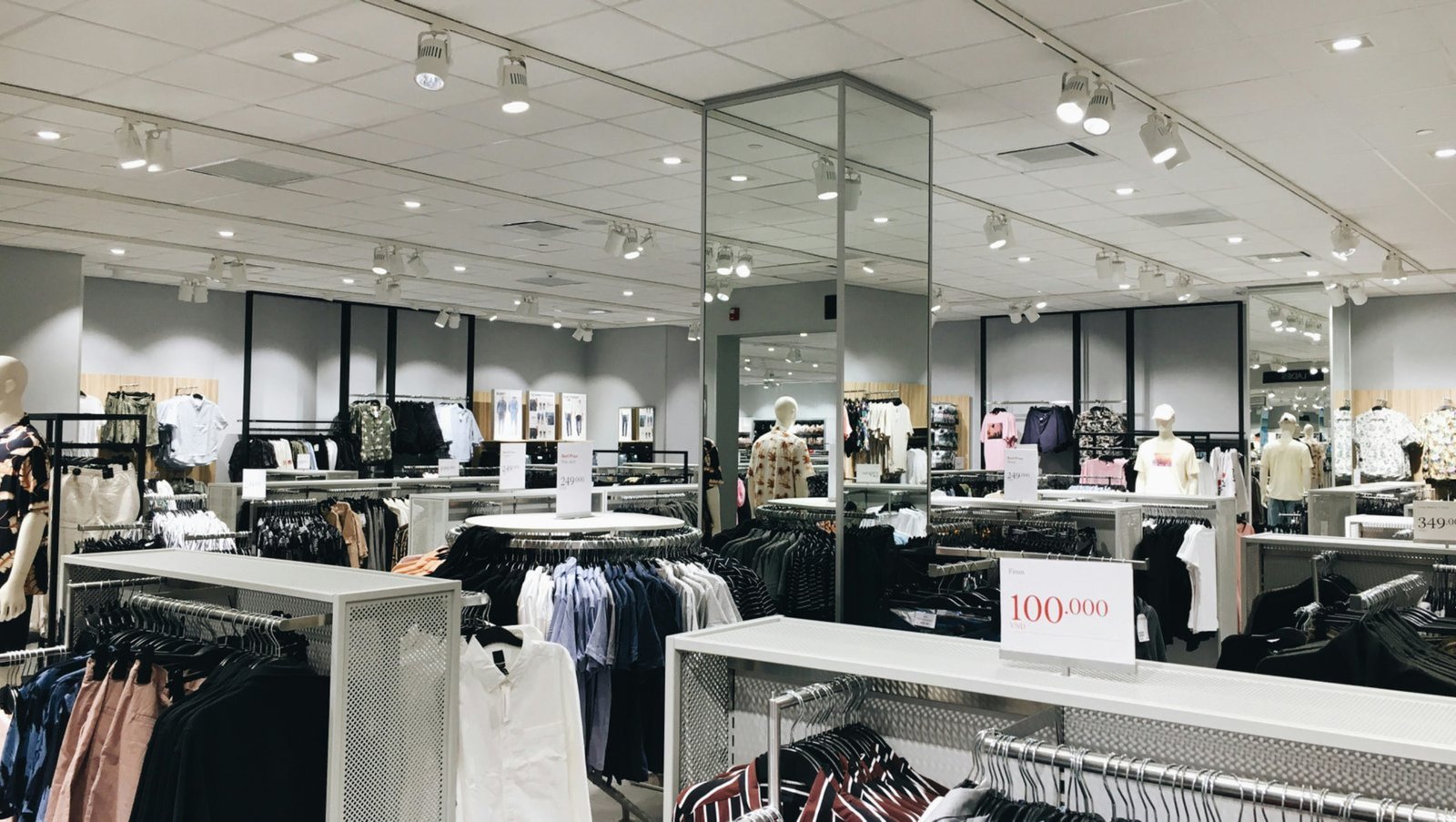
Start with the Store Dimensions
I usually ask for a basic floor plan with dimensions. The total area matters, but the shape of the store matters too. A long, narrow shop requires a different arrangement from a square showroom, even when both have the same floor area.
The most useful dimensional details include:
- Total floor area in square meters or square feet
- Length and width of each major zone
- Finished ceiling height
- Actual fixture mounting height
- Shelf, rack, counter, and display locations
- Aisle widths
- Window and entrance positions
- Existing track or recessed opening locations
Mounting height deserves particular attention. A narrow-beam track light installed at a greater height covers a larger area, but the illumination at the target can decrease. A fixture mounted closer to the merchandise may deliver stronger localized light, but poor spacing can produce bright spots and shadows.
Define What the Light Must Accomplish
“Retail store” describes many different spaces. A supermarket aisle, luxury clothing boutique, jewelry counter, car showroom, and convenience store do not have identical visual requirements.
I ask buyers to divide the space into functional zones:
- General circulation areas
- Wall-mounted merchandise displays
- Central shelving or racks
- Feature tables and promotional displays
- Checkout counters
- Fitting rooms
- Window displays
- Storage or staff areas
General lighting supports orientation and safe movement. Accent lighting directs attention to merchandise. Vertical lighting helps customers see products on walls and shelves. Task lighting supports activities such as checking labels, handling payments, or inspecting product details.
Account for Finishes and Merchandise
Dark walls, dark ceilings, and dark floors absorb more light than pale, reflective surfaces. Tall shelves can also block light and create shadows. A fixture plan that appears sufficient in an empty white room may perform differently after dark displays and merchandise are installed.
I therefore ask for photographs, renderings, or material information when available. Even a simple annotated floor plan is more useful than a request that only states the desired wattage.
A practical project brief should answer:
- What is the store area?
- What is the mounting height?
- Which zones need general or accent lighting?
- Where will the merchandise be displayed?
- What fixture types can the ceiling accept?
- Is dimming or lighting control required?
- Which local illuminance targets or project standards apply?
Any numerical illuminance targets should be checked against the project brief, local requirements, and the recommendations of a qualified lighting professional.
How Can You Estimate Total Lumens for a Retail Store?
A square-meter shortcut may seem convenient, but it can hide important assumptions. Using area alone ignores beam distribution, optical losses, surface reflectance, and layout. A better preliminary estimate starts with the desired illuminance and then adjusts for how effectively the proposed system delivers light.
A preliminary estimate multiplies the target illuminance in lux by the target area in square meters. The result represents lumens needed at the surface, not necessarily total fixture lumens. A practical fixture estimate must also account for utilization, maintenance, mounting height, optics, and layout before dividing the total by each fixture’s output.
Use the Basic Relationship Carefully
The simplest relationship is:
Target-surface lumens = target illuminance in lux × target area in square meters
Suppose a hypothetical 100-square-meter retail area has a project target of 500 lux. The basic arithmetic gives:
500 lux × 100 m² = 50,000 lumens reaching the target plane
This example explains the relationship between lux, area, and delivered light. It does not mean that purchasing fixtures with exactly 50,000 nominal lumens will produce 500 lux uniformly throughout the store.
The appropriate illuminance target should be verified for the retail category, merchandise, local requirements, and design intent before this calculation is used for procurement.
Allow for Real Installation Conditions
Not all fixture output reaches the useful plane. A more developed preliminary method may consider:
- Utilization: How much emitted light reaches the intended area
- Maintenance: How output changes because of dust, aging, or operating conditions
- Room geometry: How wall and ceiling proportions affect distribution
- Surface reflectance: How much light is absorbed or reflected
- Beam distribution: Whether the output is narrow, medium, wide, asymmetric, or diffuse
- Obstructions: Whether shelves and architectural elements block the light
A lighting designer may use a formula that incorporates utilization and maintenance factors. However, these factors should not be guessed merely to create a precise-looking answer. Photometric files and project-specific calculations provide a better basis.
Convert the Requirement into a Fixture Count
After determining a preliminary total fixture output, buyers can divide it by the nominal lumens per fixture:
Preliminary fixture quantity = required total fixture lumens ÷ lumens per fixture
For instance, if a project’s adjusted estimate calls for 60,000 nominal fixture lumens, products rated at 2,000 lumens would produce an arithmetic starting point of 30 fixtures.
That number still needs layout validation. Thirty fixtures arranged poorly can produce dark aisles, excessive overlap, glare, or uneven walls. In addition, a mixed system may be more suitable than using one fixture throughout the store. A buyer might combine:
- Wide-beam downlights for ambient illumination
- Adjustable track lights for merchandise
- Linear lights for aisles or shelving
- Magnetic lighting modules for flexible feature zones
I use this arithmetic to support presales discussion. I do not present it as a substitute for a photometric layout, sample test, or professional review.
Is 2,000 Lumens per Retail Fixture Enough?
Buyers often ask for one output figure that can simplify product selection. A reference value is useful during an early conversation, but it can become misleading if it is treated as a rule. Fixture output cannot be separated from mounting height, beam angle, spacing, and the lighting task.
Around 2,000 lumens per track light or downlight can be an initial reference for some conventional retail applications. It is neither a universal requirement nor the total lumens for a retail store. The correct output may be lower or higher depending on fixture optics, ceiling height, merchandise, layout, and target illuminance.
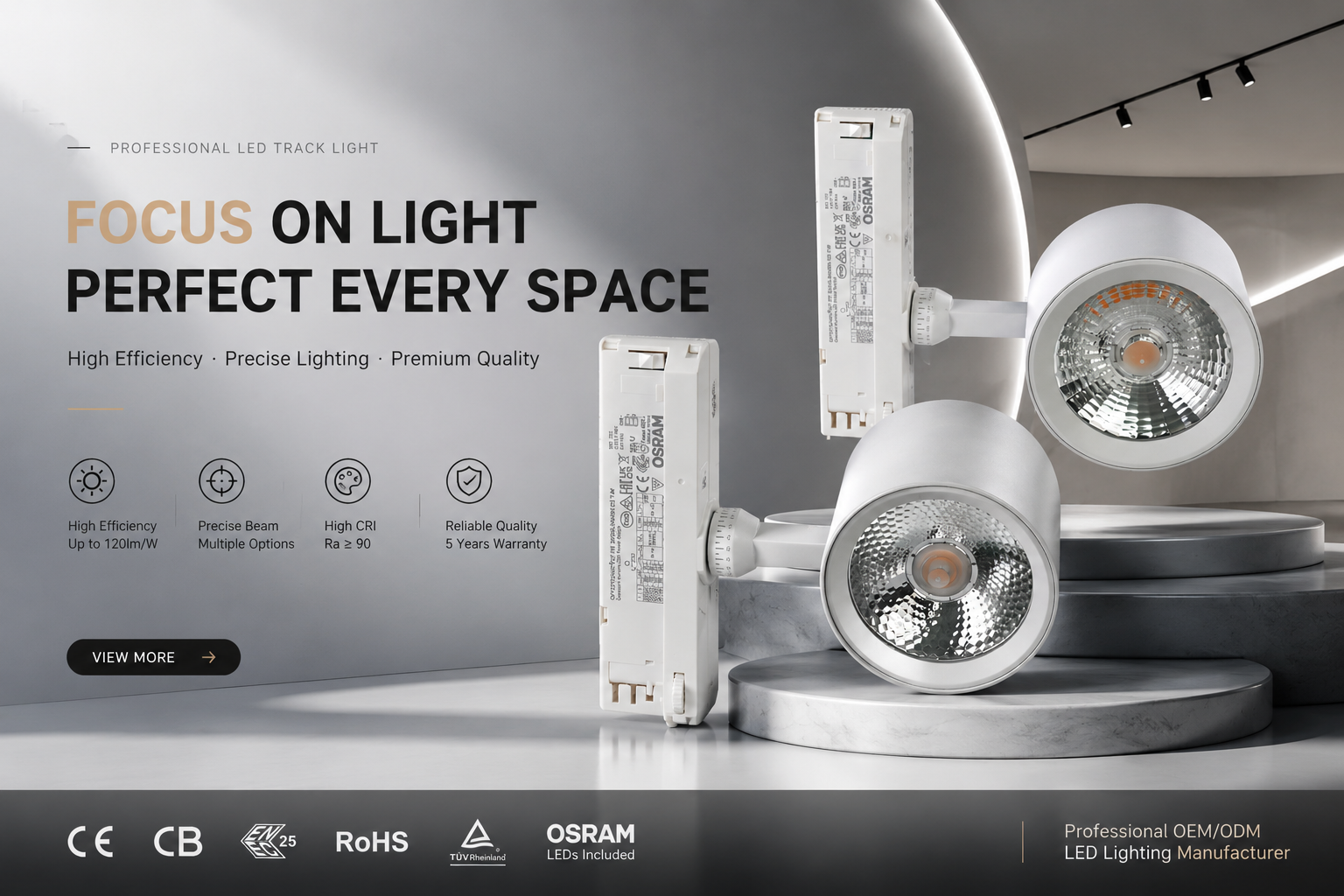
Treat 2,000 Lumens as a Conversation Starter
In early presales discussions, a fixture around 2,000 lumens can help establish a practical reference point for conventional track lights or downlights. It lets us discuss likely fixture quantity, power range, body size, beam angle, and installation method.
However, I would not recommend ordering a full store’s fixtures based on that figure alone.
A 2,000-lumen narrow-beam track light may create a strong accent on a small display. A 2,000-lumen wide-beam downlight may distribute light over a broader area. Both fixtures have the same nominal output, but customers will not experience them in the same way.
Evaluate More Than the Lumen Label
When comparing 2,000-lumen fixtures, buyers should examine:
| Factor | Why It Matters |
|---|---|
| Beam angle | Controls the size and concentration of the illuminated area |
| Photometric distribution | Shows where the fixture sends its output |
| Mounting height | Affects beam coverage and target illuminance |
| Glare control | Influences visual comfort and fixture appearance |
| Color rendering | Affects how merchandise colors and materials appear |
| Color temperature | Influences the visual atmosphere and brand presentation |
| Dimming compatibility | Allows output adjustment after installation |
| Thermal design | Supports stable performance and product life |
| Driver quality | Affects flicker, reliability, dimming, and electrical performance |
Rated output should also be confirmed under the proposed configuration. A different color temperature, LED package, lens, or driver setting can affect the final lumen output.
Compare Samples Before a Large Order
Our usual process supports one or two paid samples before mass production. When the customer later places a bulk order for the same model and specification, the sample charge can be returned under the agreed order terms. International freight and customs costs remain the buyer’s responsibility.
A sample allows the buyer to check:
- Actual beam appearance
- Brightness at the expected mounting distance
- Glare and cut-off
- Housing finish and dimensions
- Color temperature consistency
- Color appearance of merchandise
- Driver behavior and dimming compatibility
- Installation details
A sample cannot reproduce an entire store layout, but it reduces the risk of relying only on a catalog figure. Buyers should record the exact sample specification so that the approved configuration can be matched during bulk production.
Why Can Equal Lumens for a Retail Store Produce Different Results?
Two lighting proposals can list the same total installed lumens and still create visibly different stores. A simple total does not explain where the light lands. Poor distribution can leave dark shelves and overlit floors, while a well-planned arrangement can support merchandise with the same nominal output.
Equal lumens for a retail store can produce different results because beam angle, fixture type, spacing, aiming, mounting height, glare control, and room surfaces change light distribution. Total lumens describe output, but they do not describe uniformity, contrast, vertical illumination, visual comfort, or the brightness perceived by customers.

Beam Angle Changes Intensity and Coverage
A narrow beam concentrates output into a smaller area. It can create visual contrast and highlight a mannequin, product table, artwork, or premium display. However, narrow beams may create gaps when they are spaced too far apart.
A wide beam covers more area and can improve general uniformity. However, it may provide less concentrated illumination on a specific product. It can also spill light onto areas that do not need emphasis.
The choice is not simply “narrow is bright” and “wide is dim.” Mounting height and distance to the target change the actual result.
Horizontal and Vertical Surfaces Need Different Attention
Floor-level illuminance does not tell the entire retail story. Many products appear on vertical shelves, racks, and walls. A store can have an adequately lit floor while merchandise faces remain dark.
Track lights are often useful because installers can aim them toward vertical or feature surfaces. Downlights generally support ambient illumination from above. Linear lights can provide continuous coverage along shelves or aisles. Magnetic systems can offer flexibility when display layouts change.
I usually encourage buyers to identify the target surface for each fixture rather than only drawing evenly spaced dots across a ceiling plan.
Contrast Influences Perceived Brightness
Customers do not perceive brightness from lumens alone. They notice contrast between bright and dark areas, reflected light from surfaces, glare within their field of view, and the adaptation of their eyes.
A store with very bright accents and dark circulation zones may feel dramatic but visually demanding. A highly uniform store may feel open and functional but provide less emphasis on premium merchandise. The right balance depends on the retail concept.
Common layout risks include:
- Track lights aimed at the floor instead of merchandise
- Large spacing between narrow-beam fixtures
- Downlights placed directly above tall shelves
- Bright fixtures installed within customers’ normal viewing angles
- Dark corners omitted from the ceiling plan
- Window displays competing with strong daylight
- Checkout or fitting areas receiving insufficient task lighting
Photometric planning software can predict many of these effects when accurate room data and fixture files are available. For important commercial projects, I recommend that buyers have a qualified lighting designer or engineer review the layout.
How Should Buyers Verify Retail Lighting Fixtures and Suppliers?
A lumen calculation may be reasonable, but inconsistent fixtures can still undermine the result. Unclear output data, unapproved substitutions, poor thermal design, and inconsistent production create procurement risk. Buyers need to evaluate both the proposed lighting performance and the supplier’s ability to reproduce the approved specification.
Buyers should verify retail fixtures through comparable photometric data, samples, written specifications, compliance documents, production controls, and pre-shipment inspection. They should confirm whether lumen values refer to the complete fixture and ensure that the sample, quotation, purchase order, and bulk products use the same LEDs, driver, optics, power, and color temperature.
Request a Written Product Specification
A useful specification sheet should identify more than wattage and lumens. I recommend confirming:
- Product model and housing dimensions
- Rated input power and operating voltage
- Nominal complete-fixture lumen output
- Luminous efficacy
- Color temperature and tolerance
- Color rendering requirements
- Beam angle or optical option
- Driver brand or approved driver specification
- Dimming protocol, if required
- Body color and surface finish
- Installation method
- Warranty terms
- Applicable test reports or compliance documents
Certifications and reports should be treated as documents for buyer verification. The buyer should check whether each document applies to the exact product model, electrical configuration, and destination market. A logo in a catalog is not enough.
Control the Approved Configuration
A fixture family may have several power levels, lenses, drivers, finishes, and LED options. Those variations can affect output and performance. The purchase order should therefore identify the exact approved version.
Our normal new-customer workflow follows these steps:
- We confirm the requirement.
- We provide a quotation.
- We prepare paid samples.
- The customer tests and approves the samples.
- Both parties confirm the bulk order specification.
- We arrange production and assembly.
- We conduct aging tests and finished-product inspection.
- We provide a pre-shipment video for confirmation.
- We release the goods under the agreed trade and payment terms.
Our factory completes assembly, adjustment, aging, and final inspection internally. We use our own molds for private-model housings and source LEDs, drivers, and supporting materials from external suppliers according to the agreed configuration. These are supplier-specific process statements, so buyers should still conduct their own due diligence.
Use Inspection to Protect the Lighting Plan
A sample approval has limited value if the bulk order changes. Buyers or third-party inspectors can compare production units with the approved sample and purchase specification.
Useful checks include:
- Power consumption
- Functional operation
- Visible color consistency
- Beam and lens configuration
- Dimming operation
- Housing dimensions and finish
- Labels and packaging
- Quantity and accessories
- Aging-test and inspection records
- Applicable electrical and safety documentation
For application-specific safety, compliance, or lighting performance decisions, buyers should consult qualified local professionals. Supplier guidance can support procurement, but it should not replace project engineering or regulatory review.
Frequently Asked Questions
Can I Calculate Retail Store Lighting from Watts Alone?
No. Watts measure electrical consumption rather than brightness. Two LED fixtures with the same wattage can produce different lumen outputs and beam distributions. Buyers should compare complete-fixture lumens, efficacy, optics, mounting height, and photometric performance instead of selecting a fixture solely by its watt rating.
How Many 2,000-Lumen Lights Does a Shop Need?
The quantity depends on the store area, target illuminance, fixture utilization, ceiling height, beam angle, layout, and merchandise. Divide an adjusted total fixture-lumen estimate by 2,000 only as an initial calculation. A layout review is still needed to identify dark areas, excessive overlap, and glare.
Should I Use Track Lights or Downlights in a Retail Store?
Track lights are useful for adjustable accent and vertical display lighting. Downlights often provide structured ambient coverage. Many stores use both. Buyers should select each type according to its lighting task rather than choosing one product solely because it offers a higher lumen figure.
Does a Higher Lumen Rating Always Mean a Better Retail Fixture?
No. Higher output can be unsuitable when it creates glare, excessive contrast, or wasted light. A good fixture must deliver the appropriate amount of light to the intended surface while meeting requirements for beam control, color quality, thermal performance, electrical compatibility, and visual comfort.
Should I Order Samples Before Purchasing Retail Lights?
Yes, especially for a new supplier or custom specification. A paid sample lets you evaluate the beam, brightness, color appearance, finish, driver behavior, and installation method. You should test the sample at a realistic mounting distance and record the approved configuration before confirming bulk production.
Conclusion
The right lumens for a retail store cannot be reduced to one universal fixture output or lumens-per-square-meter rule. Buyers should separate per-fixture lumens, total installed lumens, and target-surface lux. They should then evaluate the store area, ceiling height, merchandise layout, fixture type, beam angle, and placement. A 2,000-lumen fixture can provide an early reference, but samples and layout validation remain essential. Send us your floor plan, mounting height, target zones, and required specifications to discuss a suitable sample and preliminary retail lighting proposal.