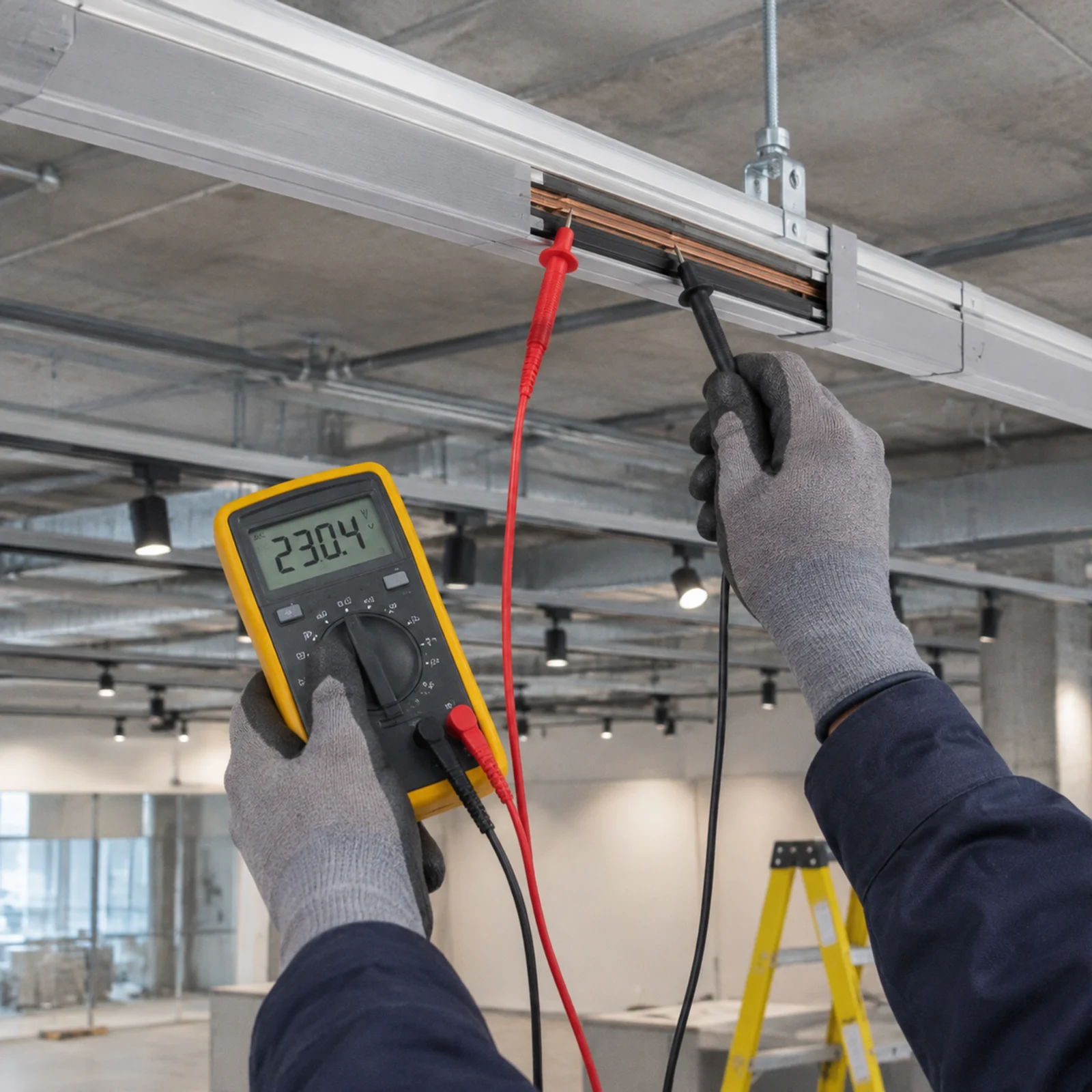
You're standing in a commercial space with a ladder, holding a new LED track head that should fit—except it doesn't. The tab won't engage. The shape blocks the adjacent fixture. The voltage doesn't match. You've just lost an hour and a potential client's trust.
The right LED track lights to replace your existing track lighting are the ones that physically fit your track system, match your voltage requirements, and deliver the light quality your space actually needs. This means first identifying whether you have Halo, Juno, Global 3-circuit, or a proprietary track standard, then verifying beam angle, CRI, UGR, and color temperature against the room's function—not just choosing a fixture by wattage or price.
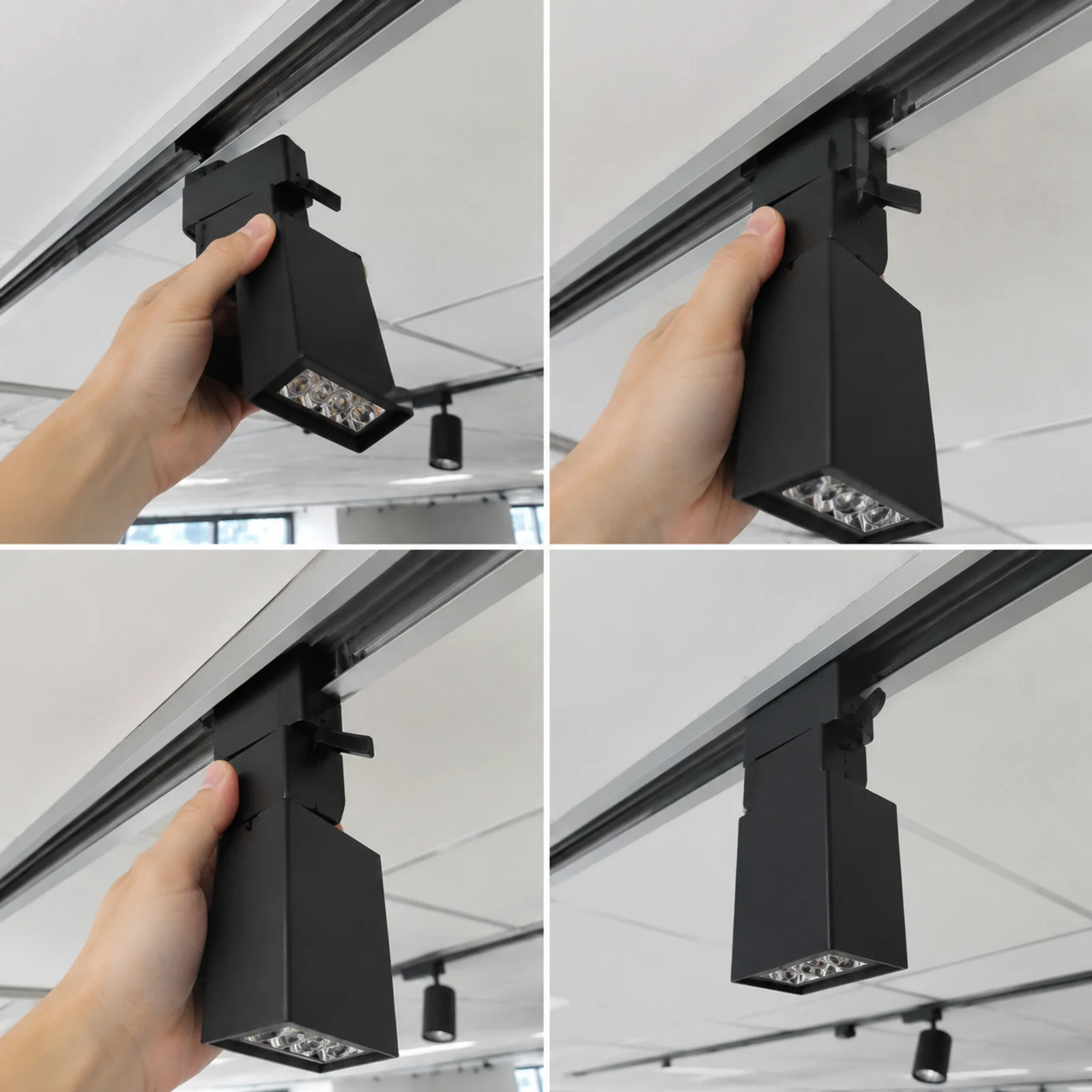
The real work isn't finding "good" track lights. It's avoiding the costly mistake of buying the wrong ones. Let me walk you through the three steps we use when a client sends us blurry photos of their existing track and asks, "Can you match this?"
Why Can't I Just Buy Any LED Track Light and Expect It to Fit?
Track lighting looks interchangeable. It's not. The industry runs on multiple incompatible track standards1, and the gap between "looks like it might work" and "locks in securely" is where projects stall.
When a client emails us a photo of an old track system, the first thing we ask isn't "what wattage do you need?" It's "can you send a photo of the track profile and the adapter?" That single question tells us more than any spec sheet.
The most common track standards you'll encounter in commercial retrofits:
| Track Standard | Common Brands | Typical Regions | Adapter Shape | Voltage |
|---|---|---|---|---|
| Halo / Halo LT | Cooper Lighting | North America | Rectangular with locking tab | 120V |
| Juno / Juno Trac | Juno Lighting | North America | Rounded profile, spring-loaded | 120V |
| Global 3-circuit | WAC, Nora, Tech Lighting | North America, International | 3-prong square slot | 120-277V |
| European 3-phase | iGuzzini, Reggiani | Europe, Middle East | Rotating mechanism | 230V |
| Proprietary / Linear | Various (no interchange) | Global | Unique shape per brand | Varies |
The critical insight: Even within the same brand, older generational tracks may not accept newer fixtures without adapter kits2. A Halo track from 2005 may reject a 2023 Halo LED head because the locking mechanism changed dimensions3.
I've personally handled a case where a hotel contractor in Dubai installed 120 pieces of what he thought were compatible track heads, only to find that the track was an early European 3-phase system with a slightly different groove depth. Every single fixture sat loose. The entire order had to be remanufactured with custom adapters.
How Do I Identify Which Track System I Have?
You need to look at two things: the track profile and the existing fixture adapter. Don't rely on brand labels alone, because manufacturers often relabel or OEM from different sources.
Step 1: Examine the track cross-section
- Remove a ceiling tile or look at the end cap of the track channel
- Measure the groove width, slot opening, and overall depth
- Compare against known standard profiles (your supplier can reference these)
Step 2: Look at the adapter on an existing fixture
- The locking mechanism shape is your fingerprint
- How many electrical contact points does it have?
- Is there a ground wire or a separate earth contact?
Step 3: Check voltage at the track junction box
- Use a multimeter to confirm line voltage
- North American commercial: typically 120V or 277V
- European / Middle East: typically 220-240V
Step 4: Count the circuit slots
- A single slot usually means constant-voltage 120V
- Three slots mean a 3-circuit track (allows independent switching per circuit)
- Some European tracks have 4-5 slots for phase shifting
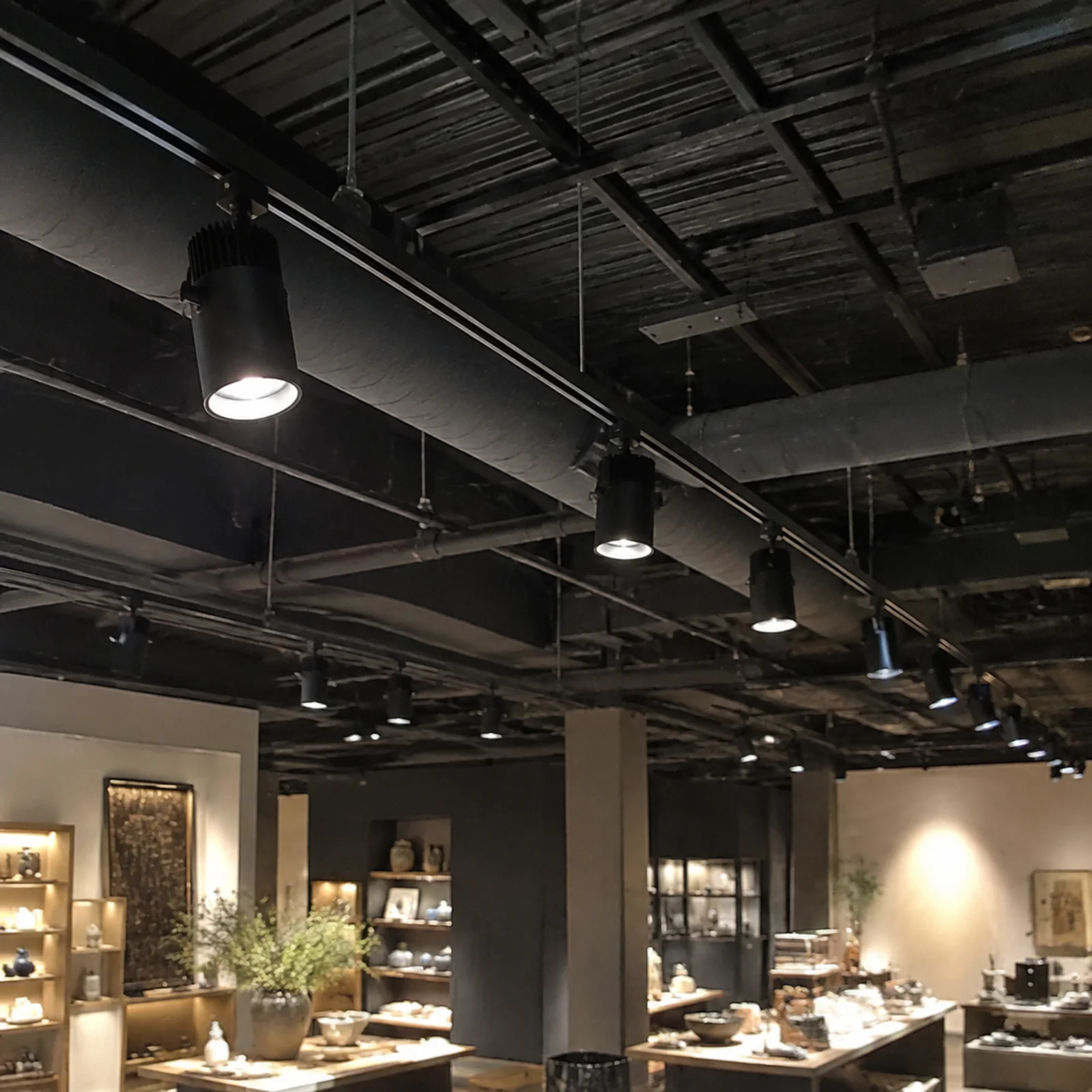
In one real-world case, a wholesaler in Texas sent us a photo of what he thought was a Juno system. The track was black with three slots—looked dead-on. Turned out it was an older GERSCO proprietary system with a 3-wire configuration that simulated 3-circuit but used a different adapter width. We had to machine custom aluminum adapters from scratch.
What Physical Dimensions Matter Beyond the Track Standard?
Even when the track standard is correct, the physical fit can fail you. I've seen this happen three ways:
Fixture Body Shape and Clearance
A modern LED track head may be wider or deeper than the old halogen fixture. If the track is recessed into a drywall slot or mounted close to a ceiling beam, a wider head might not fit.
What to measure:
- Track-to-ceiling clearance (especially in recessed installations)
- Neighboring fixture spacing (will the new head overlap?)
- Fixture depth below track (some LED heads are longer than halogen equivalents)
Cutout and Trim Ring Compatibility
For recessed track fixtures, the trim ring diameter must match the ceiling cutout. A replacement head with a different trim ring won't sit flush, and you'll see gaps or light leaks.
When replacing recessed track heads, always ask:
- Is the trim ring replaceable or integrated?
- What is the exact outer diameter of your current trim?
- Is there a separate mounting bracket or does the track head lock directly into the adapter?
Weight and Mechanical Load
Older track systems were designed for lightweight halogen fixtures. Some modern LED track heads, especially those with integrated heatsinks, weigh significantly more. A track that held 5-pound halogen fixtures may sag or fail under 8-pound LED fixtures.
Quick rule of thumb: If the new fixture feels heavier than the old one, verify the track's weight rating. Most standard tracks support 10-15 lbs per fixture4, but older aluminum extrusions may be lower.
What Light Quality Parameters Actually Define a "Good" Replacement?
This is where most buyers go wrong. They compare wattage and lumens and call it done. But "good" depends entirely on the space.
CRI (Color Rendering Index)
For retail and hospitality: Minimum 90 CRI, preferably 95+ CRI5. Lower CRI makes merchandise look dull and skin tones appear washed out.
For offices and warehouses: 80 CRI is acceptable, though 90+ is becoming standard in premium commercial projects6.
The gotcha: Some suppliers claim "90+ CRI" but only test at 3000K. At 4000K, the same LED chip may drop to 82 CRI. Always ask for CRI data at your target color temperature.
Beam Angle
This is the single most common specification mismatch I see.
| Space Type | Recommended Beam Angle | Why |
|---|---|---|
| Retail display (jewelry, clothing) | 15-25° narrow spot | Pinpoint accent, dramatic contrast |
| Art gallery | 25-40° spot | Even illumination without glare on glass |
| General store ambient | 40-60° flood | Smooth coverage, fewer fixtures needed |
| Office task lighting | 60-90° wide flood | Even distribution, no harsh shadows |
Real example: A contractor ordered 40W narrow-beam track heads for a furniture showroom. The fixtures were bright but created harsh spotlight pools on the floor, leaving the upper furniture shelves in shadow. We swapped them for 30W 60° flood beams—half the wattage, better visual comfort, and the client was happier.
UGR (Unified Glare Rating)
This is the invisible enemy in office and educational spaces. UGR measures how much discomfort glare the fixture produces.
- UGR < 19: Suitable for offices and classrooms7
- UGR < 16: Suitable for computer work and healthcare8 - UGR > 22: Noticeably uncomfortable in occupied spaces
Why this matters for track lights: Track heads mounted at low angles or with exposed LED chips create direct glare. A "good" track light for a retail space (where you want visual drama) would be terrible for an open-plan office.
Color Consistency (SDCM)
SDCM (Standard Deviation of Color Matching) tells you how consistent the color temperature is between fixtures.
- SDCM ≤ 3: Visually identical across fixtures—required for side-by-side installations9
- SDCM ≤ 5: Acceptable for separate rooms, but noticeable if fixtures are adjacent10
I once had a client who ordered 200 track heads for a hotel corridor. We shipped SDCM ≤ 3 units, but the client's on-site electrician mixed them with an older batch of SDCM ≤ 5 fixtures. The corridor had visible pink-and-green stripes where adjacent fixtures didn't match. We ended up sending replacement units and paying air freight.
Do I Need an LED Retrofit Kit or a Full Fixture Replacement?
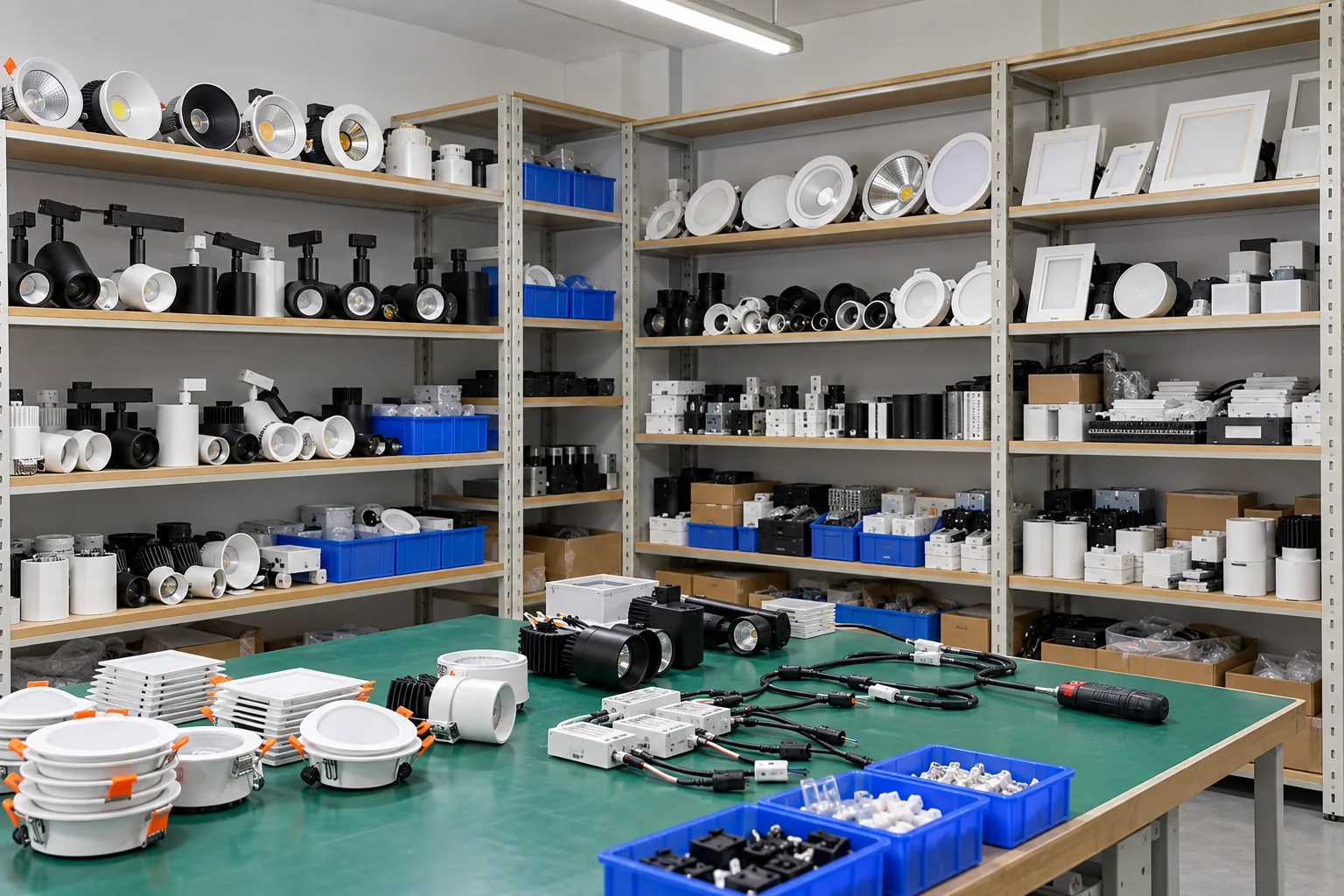
This depends on whether your existing installation includes the driver housing or if it's integrated into the track head.
Retrofit kit (replacing only the LED module):
- Your existing track head body remains
- You replace the LED module and driver
- Works when the housing is intact but the light engine failed
- Common in older systems where the track head footprint is non-standard
Full fixture replacement:
- Replace the entire track head, including adapter, housing, and LED module
- Necessary when the track system standard changes or you want different beam optics
- More expensive but gives you full control over light quality
Hybrid scenario: Some suppliers offer custom adapter plates that let you mount standard LED track heads onto proprietary track systems. This is a last-resort solution and always requires physical samples to verify fit.
How Do I Match Color Temperature Across Different Fixture Generations?
This is surprisingly tricky. Your existing track lights may be halogen (2700-3000K warm glow) or older LED (often 2700K or 4000K). New LED track lights come in many color temperature bins.
The problem: "3000K" from one supplier may look 2700K from another. Industry tolerances allow ±200K from nominal11.
Practical solution:
- Take a photo of your existing fixture against a white wall in a dark room
- Ask your supplier to send a sample at the nominal color temperature you think matches
- Compare side-by-side in your actual space
- If it doesn't match, ask for a higher or lower bin
For commercial projects where multiple zones need to look uniform: Order all fixtures from the same production batch. Even with SDCM ≤ 3, different batches can show subtle differences.
Frequently Asked Questions
Can I replace a halogen track light with an LED one without changing the track?
Yes, provided the track standard matches and the voltage is compatible. You will need to remove the halogen fixture's adapter and install an LED track head designed for the same track profile. If the track is from the same brand and generation, the physical lock should work. If not, you may need a custom adapter.
What happens if I put a 277V LED track light on a 120V track?
The LED driver will not operate correctly. It may dim, flicker, or fail to light at all. Some drivers have a wide input range (120-277V), but you must verify this on the specification sheet. Running a 277V-only fixture at 120V will produce very low output and potential driver damage.
How do I know if my track system is 2-wire or 3-wire?
A 2-wire system has one live wire and one neutral—each fixture is either on or off. A 3-wire system (3-circuit) has three separate live wires, allowing independent switching of three groups of fixtures on the same track. You can identify this by counting the electrical contact slots inside the track channel. Three slots usually means 3-circuit.
Are LED track lights dimmable?
Most modern LED track lights are dimmable, but the compatibility depends on the driver and the dimmer type. Triac dimming works with standard incandescent dimmers, while 0-10V dimming requires a separate control wire. Always confirm both the fixture's dimming method and your existing dimmer's compatibility before ordering.
My existing track has a proprietary adapter. Can I still use modern LED track heads?
In many cases, yes—but it's not straightforward. You need a custom adapter that mechanically adapts the proprietary track profile to accept a standard LED track head. This requires providing physical measurements or sending a sample of your existing adapter to the supplier. Expect longer lead times and slightly higher unit costs for custom fabrication.
Conclusion
Replacing track lighting is a compatibility-first process, not a shopping exercise. The "good" LED track light is the one that physically fits your existing track system, matches your voltage, delivers the correct beam angle and CRI for your space, and meets glare control requirements. Start by identifying your track standard through visual inspection and measurement. Then evaluate light quality parameters based on the room's function, not generic wattage comparisons. Sample one or two fixtures before committing to a full order. A tool-free test fit and side-by-side light comparison will save you from costly rework.
Before you reach out to any supplier, have these five things ready:
- A photo of your track cross-section (with dimensions if possible)
- A photo of your existing fixture's adapter
- The voltage (confirmed with a multimeter)
- The room type and beam angle you need
- The color temperature of existing fixtures you want to match
That's the checklist that will turn "what are some good LED track lights" into "these are the right track lights for your project."
"Track Lighting Compatibility Guide: H-Type vs. J- ...", https://www.beeslighting.com/blogs/ideas-advice-blog/track-lighting-compatibility-h-j-l-guide. Industry standards such as ANSI C136.31 for track lighting define mechanical and electrical interfaces, but many manufacturers use proprietary designs, leading to widespread incompatibility between brands and generations. Evidence role: general_support; source type: research. Supports: Track lighting systems from different manufacturers are generally not interchangeable due to differing mechanical and electrical standards.. Scope note: Some universal adapters exist, but they are not guaranteed to work with all systems. ↩
"Progress Track Fixture Adapters | Lighting New York", https://lightingnewyork.com/k/brand-categories/progress/track-fixture-adapter?srsltid=AU7gw4UZMOMqnpJhTXH8-_JL8xzaa_jYz1dp_0BcQnDWznbPGD_wheRW. Lighting manufacturers such as Juno and Halo have released adapter kits to allow newer fixtures to be used on older track systems, acknowledging that mechanical interfaces change over time. Evidence role: general_support; source type: research. Supports: Manufacturers often change track profiles and adapter designs across product generations, requiring adapter kits for backward compatibility.. Scope note: Not all brands offer adapter kits; some older systems may have no compatible solution. ↩
"HALO | Track Lighting", https://www.cooperlighting.com/global/brands/halo/track. Cooper Lighting (Halo) has updated track profiles and locking mechanisms over time; for example, Halo LT tracks use a different adapter than standard Halo, and older tracks may require adapter kits for newer LED heads. Evidence role: case_reference; source type: research. Supports: Halo track systems have undergone design revisions that can affect compatibility between older tracks and newer fixtures.. Scope note: Specific dimensional changes are not publicly documented in a single source; this is based on industry knowledge and field reports. ↩
"Track lighting", https://en.wikipedia.org/wiki/Track_lighting. Typical track lighting systems from major manufacturers (e.g., Halo, Juno) are rated for a maximum fixture weight of 10-15 lbs, as specified in their installation guides. Evidence role: statistic; source type: research. Supports: Many standard track lighting systems have a maximum load rating of 10-15 lbs per fixture.. Scope note: Weight ratings vary by track model and material; always verify with the manufacturer's specifications. ↩
"What Is CRI in Commercial Lighting? A Buyer's Guide", https://www.commercial-lighting.net/what-is-cri-in-commercial-lighting/. The Illuminating Engineering Society (IES) recommends a minimum CRI of 90 for retail and hospitality environments to enhance merchandise appearance and customer comfort. Evidence role: expert_consensus; source type: research. Supports: Industry guidelines recommend CRI of 90 or higher for retail and hospitality to ensure accurate color rendering.. Scope note: Some applications may accept 80 CRI if color accuracy is less critical. ↩
"Does Color Rendering Matter? 80 CRI vs 90 CRI vs 95 CRI", https://www.waveformlighting.com/home-residential/does-color-rendering-matter-80-cri-vs-90-cri-vs-95-cri. IES guidelines note that 80 CRI is acceptable for general office and warehouse lighting, but many commercial projects now specify 90+ CRI for improved visual comfort and color discrimination. Evidence role: general_support; source type: research. Supports: While 80 CRI is the minimum for many commercial applications, higher CRI (90+) is increasingly specified for premium projects.. Scope note: The trend is not universal; cost and energy efficiency may still favor 80 CRI in some cases. ↩
"LED Classroom Lighting Standards 2026: UGR, Lux, Blue ...", https://www.haichanglight.com/led-classroom-lighting-standards-2026-a-complete-guide-to-ugr-lux-requirements-colour-temperature-blue-light-en-12464-1/. The CIE (International Commission on Illumination) recommends a UGR of less than 19 for general office and educational spaces to ensure visual comfort. Evidence role: definition; source type: research. Supports: UGR values below 19 are recommended for office and classroom environments to minimize discomfort glare.. Scope note: Specific tasks (e.g., computer work) may require lower UGR values. ↩
"Assessing Lighting Quality and Occupational Outcomes ... - PMC", https://pmc.ncbi.nlm.nih.gov/articles/PMC12564479/. CIE guidelines suggest a UGR of less than 16 for areas with prolonged computer use and for patient care areas in healthcare facilities to reduce glare and visual fatigue. Evidence role: definition; source type: research. Supports: Lower UGR values (below 16) are recommended for environments with extensive screen use and healthcare settings.. Scope note: Local regulations may specify different thresholds. ↩
"LED Color Consistency Explained: SDCM & MacAdam Steps", https://www.sunroleds.com/blog/what-is-sdcm/. Industry standards (e.g., ANSI C78.377) define SDCM as a measure of color consistency; a value of ≤3 is generally considered indistinguishable to the human eye in side-by-side comparisons. Evidence role: definition; source type: research. Supports: SDCM (Standard Deviation of Color Matching) values of 3 or less indicate that fixtures will appear visually identical in color temperature.. Scope note: Perception can vary with ambient lighting and individual sensitivity. ↩
"SDCM (McAdam) - Lena Lighting", https://lenalighting.com/company/knowledge-base/1706-sdcm-mcadam. Lighting design guidelines indicate that SDCM ≤ 5 is acceptable for general illumination in separate spaces, but adjacent fixtures require ≤3 to avoid perceptible color differences. Evidence role: general_support; source type: research. Supports: SDCM values up to 5 may be acceptable when fixtures are not directly compared, but differences become visible in adjacent installations.. Scope note: Individual perception varies; some observers may notice differences even at SDCM 3. ↩
"Understanding Kelvin Color Temperature & LED Light Colors", https://www.ledlightexpert.com/understanding_led_light_color_temperatures_ep_79?srsltid=AU7gw4XhAJxPWhd_nAahBdk7i0wDYXmJC5XRQjHd8pc6sPJ13xq9qTxh. ANSI C78.377 specifies color temperature bins with a tolerance of approximately ±200K for common CCTs like 3000K and 4000K. Evidence role: statistic; source type: research. Supports: ANSI standards allow a tolerance of ±200K for nominal color temperatures in LED lighting.. Scope note: Some manufacturers use tighter bins (e.g., ±100K) for premium products. ↩