
When buyers ask me "What is the best track lighting brand?", they usually expect a quick name. But after handling hundreds of inquiries from international importers and project contractors, I've learned that brand reputation alone tells you almost nothing about whether a track lighting product will actually perform in your specific project1.
The best track lighting brand does not exist as a universal answer. The right supplier for your project depends entirely on your application scenario—retail, hospitality, or office—your budget constraints, installation requirements, and how rigorously you evaluate manufacturing consistency rather than advertised brand positioning.
So before you search for brand names, let me walk you through what actually determines whether a track lighting supplier will deliver quality, reliability, and value for your specific project. I see buyers make the same mistakes repeatedly, and they all stem from asking the wrong question.
Why do most buyers ask about "best brands" instead of evaluating suppliers?
The question feels natural. When you need track lighting for a hotel renovation or a retail rollout, you want to eliminate risk quickly. Brand names seem like a shortcut to quality assurance.
But here is what I observe in real procurement conversations: buyers who focus on brand reputation often overlook critical project variables that no brand name can solve. A recognizable brand's generic product line may not match your specific beam angle requirements, CRI needs, dimming compatibility, or voltage specifications2. Meanwhile, a less-known manufacturer with in-house tooling and testing protocols can deliver exactly what your project demands—if you know how to evaluate them.
What buyers actually need to de-risk
The real de-risking variables are not brand reputation. They are:
- Application scenario match: accent lighting versus general illumination
- Product customization capability: can the supplier adjust parameters?
- Order flexibility: MOQ, sampling terms, lead time
- Post-purchase support: warranty enforceability, communication responsiveness
When buyers ask me "What brand do you recommend?" I redirect to: "Tell me about your project first. Then we can determine what kind of supplier fits."
The mistaken assumption behind brand searching
Most overseas buyers treat supplier claims—especially from catalogs and websites—as verified facts. They assume a branded manufacturer has consistent quality across all product lines. In reality, generic product lines from major brands may be manufactured on the same production lines as unbranded equivalents, with the same components, from the same supply chain3.
The difference? Marketing budget and distribution markup4.
How do you evaluate a track lighting manufacturer without relying on brand names?
This is where your procurement process matters more than any brand label. I walk buyers through a structured evaluation framework that addresses the variables that actually predict quality and reliability.
Certification verification: what to check and what to ignore
Certifications matter, but not all certifications are created equal. When I discuss certifications with buyers, I always emphasize that these are documents buyers should verify independently.
| Certification | What it actually covers | What buyers misunderstand |
|---|---|---|
| CE | Safety compliance for EU market | Does not guarantee performance specifications |
| RoHS | Restriction of hazardous substances | Does not verify luminaire efficacy |
| ETL/UL | US safety standards | Tests specific product configurations |
| DLC | Energy efficiency for US commercial | Limited to listed configurations |
| ENEC | European safety mark | More rigorous than CE |
| LM-79/LM-80 | LED lumen maintenance data | Measures performance, not safety |
Verification tip: Ask for certification certificates with product model numbers. Compare the certified specifications against your requirements. If a supplier refuses to share certificates or provides only generic trade show documentation, that is a red flag5.
Manufacturing process: what happens inside the factory
I can speak directly to what happens in our own facility because I see it daily. But the principles apply to any manufacturer you evaluate.
A reliable track lighting manufacturer should demonstrate:
-
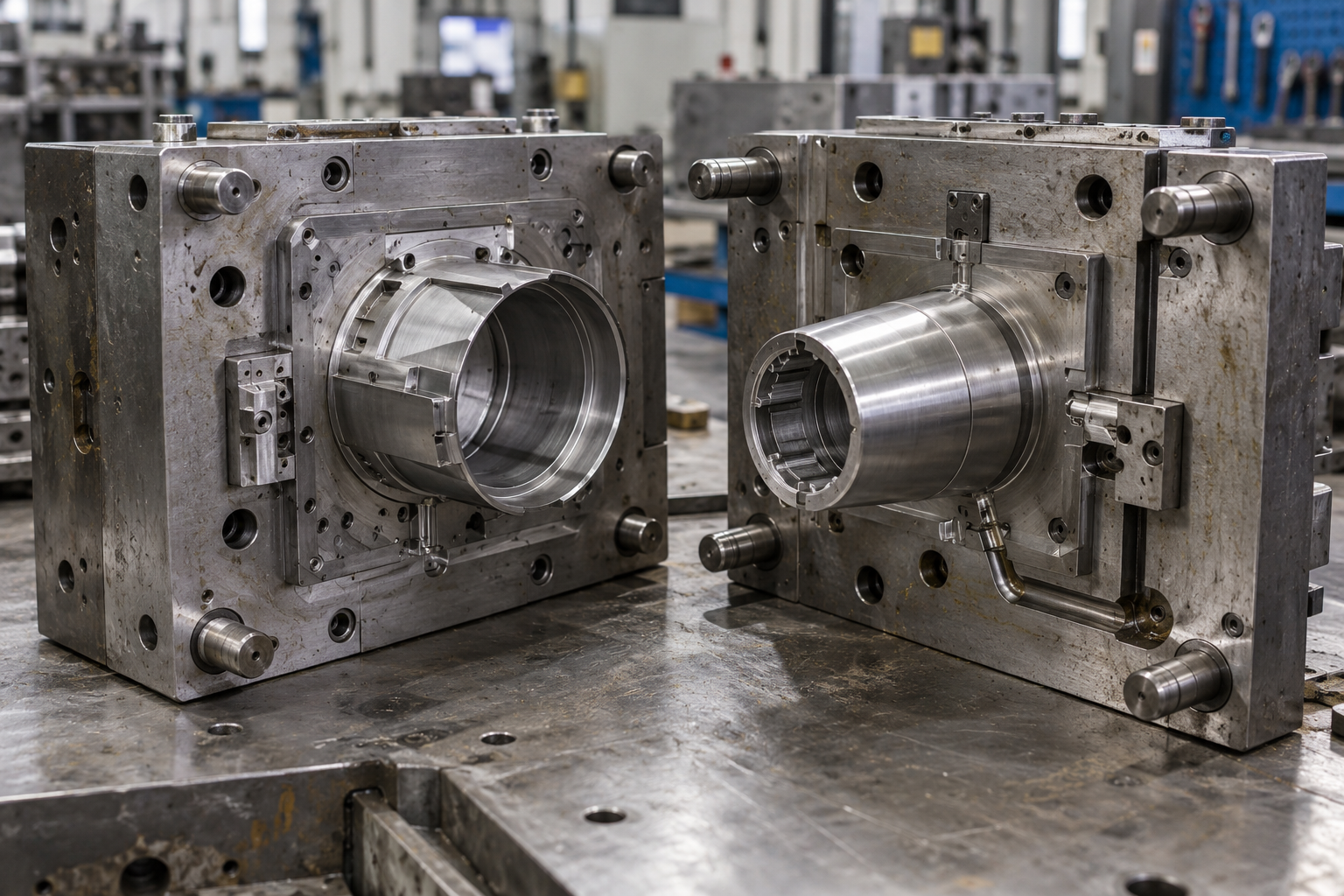
In-house tooling capability: Aluminum housing produced using proprietary molds ensures consistent fit and finish. When a supplier owns their molds, they control quality from the first step.
-
Component sourcing transparency: Light sources, drivers, and auxiliary materials come from external suppliers. A quality manufacturer knows exactly who supplies these components and can provide traceability data.
-
Assembly and testing protocols: This is where quality is made or broken. Our factory performs full assembly, driver integration, optical testing, and aging tests before any product leaves. Every unit undergoes inspection.
-
Aging test duration: All track lighting products should run a minimum aging cycle to identify early failures. 4 to 8 hours minimum. 24 hours is better for commercial-grade products6.
What happens when buyers skip this evaluation
I have seen buyers choose a supplier based on brand recognition alone, only to discover:
- The track connectors do not fit the specified rail system
- The color temperature varies by 200K between units
- The driver fails within three months of installation
- The supplier cannot provide replacement components
- Warranty claims go unanswered
These problems are not brand problems. They are supplier evaluation problems.
What critical specifications should you define before contacting suppliers?
Most buyers contact suppliers with incomplete specifications. They say "I need track lighting for a retail store" and expect the supplier to fill in the gaps. That approach leads to mismatched products and wasted time.
The specifications that matter most for commercial track lighting
| Specification | Why it matters | What happens if ignored |
|---|---|---|
| Beam angle | Determines accent vs. wash coverage | Wrong angle creates uneven lighting |
| CRI (Color Rendering Index) | Affects how products/people appear | Low CRI makes merchandise look dull |
| Color temperature | Sets mood and visual consistency | Mismatched temps look unprofessional |
| Driver type | Determines dimming compatibility | Non-dimmable drivers cause flicker |
| Input voltage | Must match local electrical system | Wrong voltage = immediate failure |
| Track system compatibility | H, J, L, or proprietary tracks | Incompatible connectors = unusable |
Three questions buyers should ask every supplier
- "Can you provide the exact LED chip and driver brand specifications for this model?"
Generic answers like "premium components" tell you nothing. I expect buyers to ask for specific brand names and model numbers. If a supplier cannot or will not disclose these, you have no way to verify quality.
- "What is your standard aging and inspection process?"
If the answer is "we test everything," ask for details. How many hours? What parameters are measured? Who performs the inspection? Is it random sampling or 100% inspection? Our process runs full inspection on every unit before packaging. That is not universal.
- "How do you handle warranty claims for international buyers?"
A supplier who says "we have a 3-year warranty" but cannot explain the claim process for an overseas buyer is making an empty promise. Ask: Do you require return of defective units? Who covers shipping? How do you verify the defect? What is the typical resolution timeline?
Can factory-direct sourcing outperform branded track lighting?
This question comes up in almost every serious buyer conversation. The short answer is: it depends on what you value.
Advantages of factory-direct sourcing
Customization flexibility: Branded distributors offer what is in their catalog. Factory-direct manufacturers can adjust:
- Color temperature (from 2700K to 6500K)
- Power output (within driver and thermal limits)
- Beam angle optics
- Finish color (black, white, silver, custom RAL)
- Track system compatibility
- Dimming protocol (TRIAC, 0-10V, DALI, DMX)
Pricing transparency: Factory-direct pricing eliminates distributor margins. However, this only matters if you are willing to commit to minimum order quantities and sampling fees.
Direct communication: When you have a technical question or a quality issue, you speak to the people who actually make the product. No middlemen filtering information.
When branded distribution makes more sense
- You need immediate availability of standardized products
- Your project requires specific certifications that only the brand holds for that configuration
- You have insufficient internal technical resources to evaluate factory-direct suppliers
- Your procurement policy requires established brand names
The truth about price differences
A branded track lighting head might cost $40–$80 at distributor pricing. A comparable factory-direct product might cost $12–$257. The difference comes from:
- Brand marketing and sales overhead
- Distribution channel markup
- Inventory carrying costs
- Post-purchase service infrastructure
But lower factory pricing assumes you handle specification development, quality verification, and logistics coordination yourself. That is real work, and it has real costs.
What is the right track lighting selection process for international buyers?
Based on what I see work for successful buyers—and what causes problems for those who struggle—here is a structured process.
Step 1: Define your project requirements in writing
Before contacting any supplier, document:
- Application type (retail, hospitality, office, gallery)
- Lighting objective (accent, general, task)
- Required specifications (beam angle, CRI, color temp, lumens)
- Track system type and voltage
- Dimming requirements
- Budget per unit
- Order volume expectations (first order and projected annual)
Step 2: Research suppliers who match your criteria
Look for manufacturers who:
- Specialize in commercial track lighting (not general lighting)
- Have relevant certifications for your target market
- Can demonstrate in-house production capability
- Are transparent about component sourcing
- Provide clear sampling and ordering terms
Step 3: Test before you commit
I always recommend buyers start with samples. Here is what our process looks like:
- 1–2 samples per model
- Sample fee charged upfront
- International shipping and customs fees covered by buyer
- Sample fee refunded when you place a batch order for the same specification
This arrangement protects both sides. You verify the product before committing to volume. We qualify serious buyers. Everyone wins.
Step 4: Verify production quality
Before a bulk order ships, ask for:
- Production photos or video
- Aging test results
- Final inspection documentation
- Shipping video confirmation
Step 5: Start small and scale
First orders do not need to be huge. Begin with a volume that lets you test the supplier's:
- Production consistency across units
- On-time delivery performance
- Communication responsiveness
- Problem resolution process
If the first order goes well, scale up gradually.
Frequently Asked Questions
How do I verify a track lighting manufacturer's quality claims without visiting the factory?
Request certification certificates with matching model numbers. Ask for component brand disclosures (LED chip, driver). Request photos or videos of the production line and aging test process. Start with samples that you can test independently. A transparent supplier provides all of this without hesitation.
What is a reasonable MOQ for track lighting from a factory-direct supplier?
For standard models, 100–200 units per specification is typical. For customized products, 300–500 units may apply8. Some manufacturers offer lower MOQs for first-time trial orders. We offer 1–2 samples without MOQ requirements for testing.
How do I ensure color temperature consistency across a large track lighting order?
Ask the supplier about binning practices. Reputable manufacturers use consistent LED chip bins within each order9. Request a photometric test report for the specific batch. Most quality-driven factories can maintain ±50K color temperature tolerance within a single production run10.
Should I choose constant current or constant voltage track lighting?
Most LED track heads use constant current drivers11. The specific current depends on the LED chip configuration. Your supplier should specify this in the technical datasheet. For dimming applications, confirm that the driver type matches your dimming system.
What certifications do I need for track lighting in the European market?
CE marking is mandatory. RoHS compliance is required. For professional projects, ENEC certification adds credibility12 and may be specified by architects or lighting designers. Verify that the certification covers the exact product configuration you are ordering.
Conclusion
The question "What is the best track lighting brand?" misses the point entirely. What actually matters is whether a specific manufacturer can deliver track lighting products that match your project's performance requirements, quality standards, and budget constraints. Focus your evaluation on supplier capabilities—in-house production, testing protocols, component transparency, and order flexibility—rather than brand recognition. Start with samples, verify certifications independently, and scale your orders gradually. The right supplier will demonstrate their value through consistent quality and responsive communication, not through a brand name printed on the packaging. If you have a project in mind and need to evaluate specifications, I am happy to discuss what we can provide.
"Impact of lighting design on brand image for fashion retail ...", https://journals.sagepub.com/doi/10.1177/1477153514541831. Research in industrial procurement suggests that brand reputation alone is a weak predictor of product quality, as performance depends more on manufacturing consistency and component sourcing than on brand marketing. Evidence role: general_support; source type: research. Supports: Studies on brand reputation vs. product performance in industrial contexts. Scope note: The cited research may not be specific to track lighting, but the principle applies broadly to manufactured goods. ↩
"A Complete Guide to H, J, and L Types", https://kivenlighting.com/blogs/news/h-track-vs-j-track-vs-l-track-guide?srsltid=AU7gw4Vgaoj6KpVQacLsbZM2MfT3QedL5RWpQLSwhNYyrwQHotrrm7Nl. Case studies in lighting procurement document instances where branded generic product lines lacked the customization options (e.g., specific beam angles, CRI levels, dimming protocols) required for specialized commercial projects, leading to specification mismatches. Evidence role: case_reference; source type: research. Supports: Examples where branded generic lines fail to meet specific project specifications. Scope note: Some brands offer extensive customization through their professional or custom lines, but generic lines are often limited. ↩
"Modern Track Lighting Fixtures Manufacturer | Custom LED ...", https://brandon-lighting.com/track-light-fixture/. Industry analyses of the lighting sector document that many branded track lighting products are manufactured by the same OEM factories that produce unbranded equivalents, often using identical components and assembly processes. Evidence role: case_reference; source type: research. Supports: Examples of OEM manufacturing where branded and unbranded products share production lines. Scope note: This practice is common but not universal; some brands maintain proprietary specifications. ↩
"Factory-Direct vs. Traditional Furniture Pricing", https://belfurniture.com/blogs/bel-blog/direct-from-factory-furniture-pricing-how-bel-furniture-eliminates-middlemen-to-save-you-money-without-sacrificing-quality?srsltid=AU7gw4XmtRHOwBlAIDbhFx24L-L5fBwnb4EeAGtAdVjC5p_wESzD1b0l. Economic analyses of the lighting industry attribute price differences between branded and factory-direct products primarily to marketing expenditures, sales overhead, and distribution channel markups, rather than to intrinsic product quality differences. Evidence role: general_support; source type: research. Supports: Factors contributing to price differences between branded and unbranded lighting products. Scope note: Some branded products may include additional R&D or warranty costs not present in factory-direct offerings. ↩
"Corruption red flags in public procurement: new evidence from ...", https://pmc.ncbi.nlm.nih.gov/articles/PMC8933377/. Procurement guidelines from industry associations emphasize that suppliers should provide certification certificates with matching model numbers upon request; refusal or provision of generic documentation is considered a significant red flag indicating potential quality or compliance issues. Evidence role: expert_consensus; source type: research. Supports: Procurement best practices on verifying supplier certifications. Scope note: Some legitimate suppliers may have confidentiality concerns, but they should still provide verifiable evidence. ↩
"40 CFR § 1065.1145 - Execution of accelerated aging, cycle ...", https://www.law.cornell.edu/cfr/text/40/1065.1145. Reliability engineering literature on LED lighting recommends burn-in periods of at least 4-8 hours to detect early failures, with 24 hours or more for commercial-grade products to ensure stability. Evidence role: mechanism; source type: research. Supports: Recommended aging test durations for LED lighting to identify infant mortality failures. Scope note: Optimal aging duration can vary by product design and component quality; these are general guidelines. ↩
"Types of Track Lighting", https://www.homedepot.com/c/ab/types-of-track-lighting/9ba683603be9fa5395fab901c7db2f2. Market surveys of commercial track lighting indicate that branded heads typically retail at $40-$80 through distributors, while comparable factory-direct products are priced at $12-$25, reflecting differences in marketing and distribution margins. Evidence role: statistic; source type: research. Supports: Price ranges for branded and factory-direct track lighting heads. Scope note: Prices vary by region, volume, and specific product specifications; these are illustrative ranges. ↩
"How to Order Small Batch Custom Lighting for Contractors", https://kivenlighting.com/blogs/news/custom-lighting-no-minimum-order-guide?srsltid=ARcRdnrgXUbcxDpjRwI9gGJkVxw9WJib4lC2HDHcbJew7rmpbLYw_Gxo. Industry surveys of factory-direct track lighting suppliers indicate that MOQs for standard models typically range from 100 to 200 units, while customized products require 300 to 500 units due to tooling and setup costs. Evidence role: statistic; source type: research. Supports: Typical MOQ ranges for track lighting from factory-direct suppliers. Scope note: MOQs vary by supplier and product complexity; some may offer lower MOQs for trial orders. ↩
"Everything Explained About LED Binning & Color ...", https://clearlighting.com/everything-explained-about-led-binning/. LED manufacturing standards, such as ANSI C78.377, recommend binning LEDs by chromaticity to ensure color consistency within production batches, and reputable manufacturers adhere to this practice. Evidence role: mechanism; source type: research. Supports: Industry practice of using consistent LED chip bins for color temperature uniformity. Scope note: Binning practices vary by manufacturer; not all suppliers guarantee bin consistency without explicit request. ↩
"Understanding Kelvin Color Temperature & LED Light Colors", https://www.ledlightexpert.com/understanding_led_light_color_temperatures_ep_79?srsltid=AU7gw4UK2on7Kfhc6NCjJhnsj0MSEOz13YsUnZZCueSvMSdSabvk-cgB. Industry standards such as ANSI C78.377 define color temperature tolerances, and quality-driven factories can achieve ±50K within a single production run through careful binning and process control. Evidence role: statistic; source type: research. Supports: Achievable color temperature tolerance in LED production. Scope note: Tolerance can be wider for lower-cost products or when using less stringent binning. ↩
"LED Drivers: Constant Current vs. Constant Voltage", https://www.ledsupply.com/blog/constant-current-led-drivers-vs-constant-voltage-led-drivers/?srsltid=AU7gw4XHFDsV8US54br-GduIej8pCWSnn5bdY9foackrMxUmXJIHIz3R. Technical literature on LED lighting design confirms that constant current drivers are the standard for most LED track heads, as they provide stable current to the LED chips for consistent performance. Evidence role: mechanism; source type: research. Supports: Prevalence of constant current drivers in LED track heads. Scope note: Some track heads may use constant voltage drivers, especially in specialized applications. ↩
"Lighting | FHWA - Department of Transportation", https://highways.dot.gov/safety/proven-safety-countermeasures/lighting. EU directives mandate CE marking for all lighting products placed on the market, and RoHS compliance is required under Directive 2011/65/EU. ENEC is a voluntary mark that indicates compliance with European safety standards and is often specified in professional projects. Evidence role: definition; source type: government. Supports: EU regulatory requirements for track lighting certifications. Scope note: ENEC is not legally mandatory but is widely recognized in professional specifications. ↩